
NeyborFair Share
Ensuring that a co-living brand feels like home
Co-living could solve the issue of increasing density in our cities, yet many brands that sell shared accommodation are cold, clinical, and not particularly enticing for potential residents. Belgium’s Neybor envisions the future of co-living as a series of much warmer, more soulful environments, and its identity leads with the idea that home isn’t a place, it’s a feeling.
In the next 20 years, many cities are predicted to double in size due to overwhelming urbanization. While co-living seems to be a promising solution, the dominant tendency of players in this booming sector is to sell standardized adult dormitories by way of cold, generic brands.
Neybor chose to view the concept differently. Founded by a group of architects and designers, the company obsessively focused on one central question: when does a space become a home? The answer was channeled into carefully considered interior design, building community spirit, and, of course, branding – which is where we came in.
The brand identity was developed based on the intangible, yet universal idea that home isn’t a place, but a feeling. To bring this idea to life, talented illustrator Olga Prader was commissioned to embody this emotionally driven concept through a series of whimsical drawings. Her sketches seamlessly interact with subtle art direction and a witty tone of voice to create a soulful brand for contemporary living.
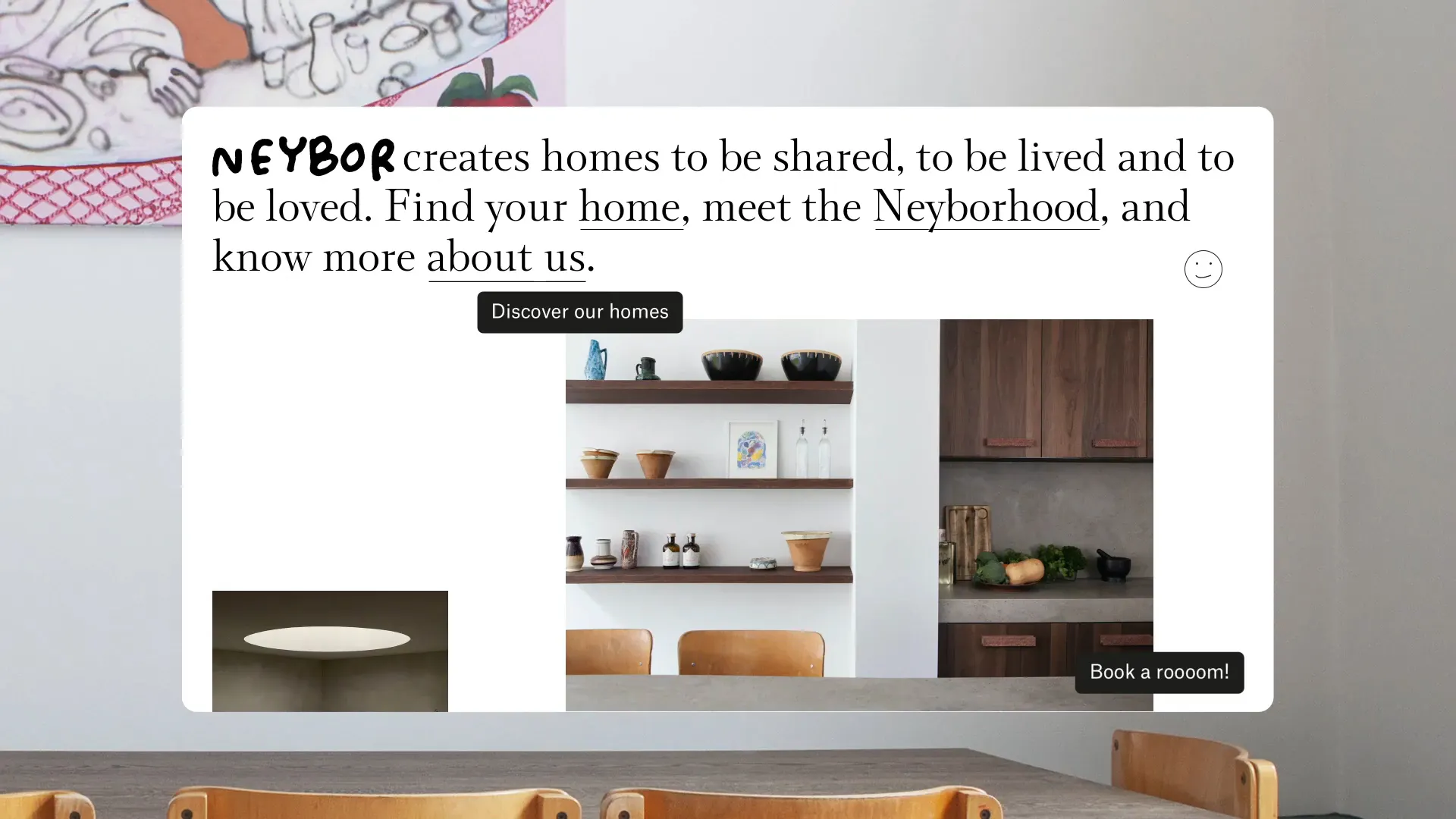
Neybor’s tone of voice is casual, friendly, personal, and welcoming, as if potential residents are speaking to a friend inviting them to stay. Its website is set up as a place for telling stories about home, and presenting homes with stories.
The uptake in Neybor properties has boomed, and the company has opened three locations in less than a year since launching. The brand’s home-oriented approach, putting its “Neybors” first and foremost, aims to elevate the standard of living in cities and a points to a bright future for the co-living phenomenon.
Co-living could solve the issue of increasing density in our cities, yet many brands that sell shared accommodation are cold, clinical, and not particularly enticing for potential residents. Belgium’s Neybor envisions the future of co-living as a series of much warmer, more soulful environments, and its identity leads with the idea that home isn’t a place, it’s a feeling.
In the next 20 years, many cities are predicted to double in size due to overwhelming urbanization. While co-living seems to be a promising solution, the dominant tendency of players in this booming sector is to sell standardized adult dormitories by way of cold, generic brands.
Neybor chose to view the concept differently. Founded by a group of architects and designers, the company obsessively focused on one central question: when does a space become a home? The answer was channeled into carefully considered interior design, building community spirit, and, of course, branding – which is where we came in.
The brand identity was developed based on the intangible, yet universal idea that home isn’t a place, but a feeling. To bring this idea to life, talented illustrator Olga Prader was commissioned to embody this emotionally driven concept through a series of whimsical drawings. Her sketches seamlessly interact with subtle art direction and a witty tone of voice to create a soulful brand for contemporary living.
Neybor’s tone of voice is casual, friendly, personal, and welcoming, as if potential residents are speaking to a friend inviting them to stay. Its website is set up as a place for telling stories about home, and presenting homes with stories.
The uptake in Neybor properties has boomed, and the company has opened three locations in less than a year since launching. The brand’s home-oriented approach, putting its “Neybors” first and foremost, aims to elevate the standard of living in cities and a points to a bright future for the co-living phenomenon.


- DesignLéa Wolf
- Digital Design & DevelopmentSergey Khegai, Viktor Tsarevskiy, Thomas Byttebier, Lukas Liefsoens, Pierre Stoffe, Volha Trehubava
- Project ManagementAndrey Starkov, Morgane Van Oncem


